
By Christian Hudspeth, CFP®
“It’s not how much money you make, but how much money you keep…” – Robert Kiyosaki
Tom earned a salary in the high six-digits from his job in medicine. He and his wife lived well in a spacious lakeside home. He drove a high-end BMW, and regularly attended big golf tournaments and invite-only parties.
Tom worked hard for his money. By his age 67, he had saved hundreds of lives along with millions of dollars for his retirement.
But Tom was tired. After a long career of being on call for emergency surgeries, Dr. Tom was ready to hang up his scrubs and finally retire.
A Rude Awakening
With a $10 million portfolio and living comfortably in the now with his large paychecks, Tom was sure he and his wife would retire comfortably.
But the math showed otherwise.
Modeling his portfolio through good, average, and bad markets, Tom’s financial plan showed his retirement funds could reliably support only half of their current lifestyle for the rest of their lives.
Tom and his wife were crushed. Imagine having to live on 50% of what you’ve been comfortable spending. (If you can’t imagine, try living on one paycheck instead of two for a month!)
Exhausted from his long working hours, Tom didn’t have many more working years left in him to delay retirement.
So, he and his wife were forced to make a life-altering decision:
- Sacrifice the lifestyle they enjoyed
- Move away from friends and family to live somewhere less expensive,
- Or keep the big lifestyle and roll the dice on outliving their money midway through retirement
This is a decision they probably would have liked to avoid.
So what went wrong?
About 10 years ago, Tom was on track financially. He began maximizing his 401k plan contributions, received a 100% employer contribution match, and knew that his high wages would give him a great Social Security check in retirement.
But a few years later, complacency hit and a bad habit began.
The Two Words that Ruin Retirement Plans
Tom treated himself to a nicer life every year. He upgraded his car, bought a larger home for his family, wore nicer clothes, and joined a country club to be closer to his friends.
Each year he received a raise, he would justify to himself that he’s maxing out his 401k contributions, so he needn’t save any more.
In just 10 years’ time, Tom’s savings rate went from 15% of his income down to just 5% by the time he was about ready to retire.
As he enjoyed a better lifestyle each year, he was effectively training his family to live on more every year while his nest egg growth lagged far behind.
The trend continued until it was too late.
Just two words ruined Tom’s dreams to retire when or how he wanted to – lifestyle creep.
Fortunately, this common fate is preventable!
Redemption: What You Can Do Differently
Let’s say Tom had checked in with a trusted financial planner 10 years ago. He could have dramatically changed his course.
When crafting a financial plan, we would look at his savings, future income, inflation, and different market simulations to project his lifestyle spending in retirement versus his lifestyle today.
Then Tom could have seen the warning signs years ahead of his retirement date (as shown in the chart below).

To change his retirement fate, we would have recommended that Dr. Tom start saving a larger portion of his earnings to keep up with his raises.
The benefits to saving a percentage of your income are three-fold:
- You manage your lifestyle creep
- You delay gratification now and allow your investment savings to grow
- Because you’ve trained yourself to live on less, you don’t need as much in retirement and don’t need as large of a nest egg
In Tom’s case, increasing his savings back to 15% of his income during his working years would have led to a completely different outcome at retirement. Here’s how that would look for him:
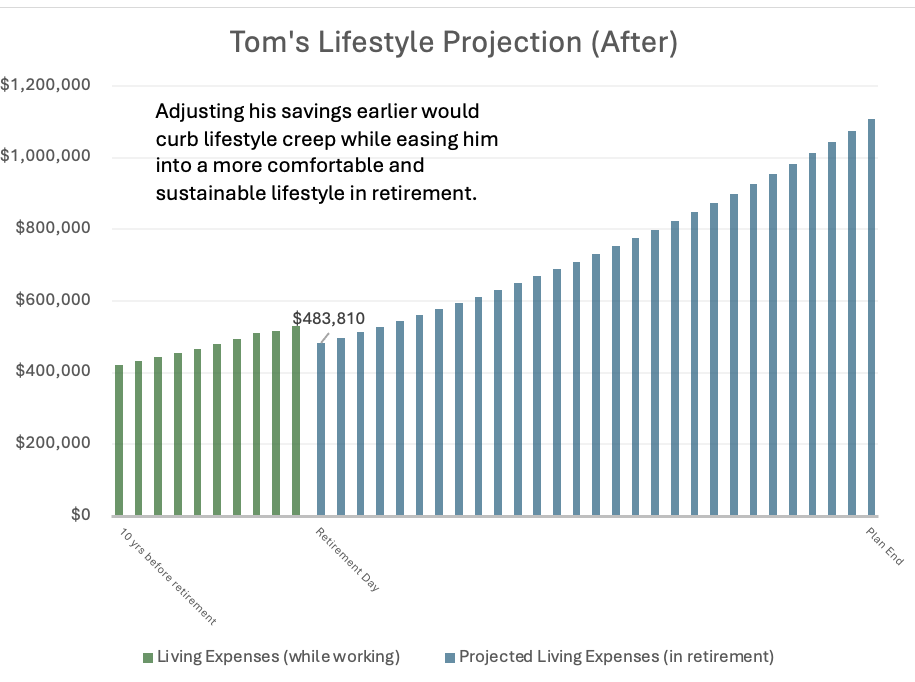
By simply adjusting his savings earlier, Tom would have managed his family’s lifestyle creep and successfully landed into a more comfortably sustainable retirement lifestyle.
Yes, saving more would mean Tom would have to live on less today to make this plan work. But many find it’s much easier to “practice being retired” on a smaller lifestyle while you’re working rather than having to do it after you’ve put in your resignation in your late 50s or 60s.
The Takeaway
Financial planning is about finding balance between your lifestyle today versus your lifestyle in retirement. When we begin building a plan for a client, we want to find the answers to two major questions:
- What age do you want to retire?
- What amount do you need each month or year to keep your lifestyle like it is?
Once we know these answers and look at the many factors involved in your situation, we can figure out how much you need to start saving today to create the retirement you want tomorrow.
Have a question? Email the author (and CFP® professional) at chudspeth@fmpwa.com.
Next: Are You Saving Too Much for Retirement?
*The information presented here is not specific to any individual’s personal circumstances. FMP Wealth Advisers is not providing investment, tax, legal, or retirement advice or recommendations in this article.
**To the extent that this material concerns tax matters, it is not intended or written to be used, and cannot be used, by a taxpayer for the purpose of avoiding penalties that may be imposed by law. Each taxpayer should seek independent advice from a tax professional based on his or her individual circumstances.
***These materials are provided for general information and educational purposes based upon publicly available information from sources believed to be reliable — we cannot assure the accuracy or completeness of these materials. The information in these materials may change at any time and without notice.